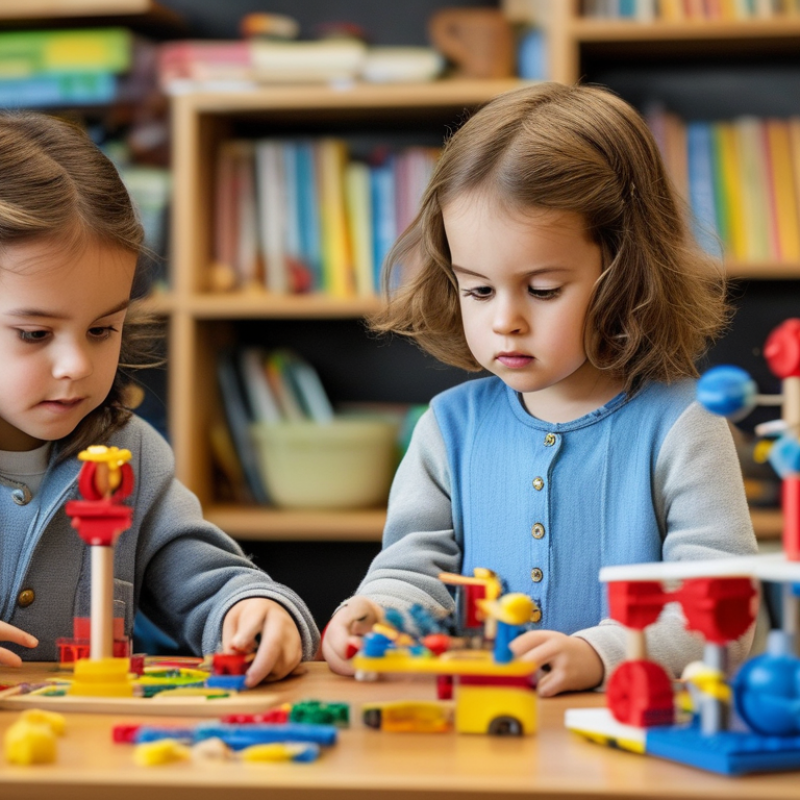
In the realm of education, parents and educators increasingly ask, "What are the benefits of STEM learning toys?" These toys engage children in science, technology, engineering, and math concepts through play. They offer an interactive way to learn, making complex ideas more accessible.
STEM toys promote critical thinking and problem-solving skills. Children who play with these toys often display heightened creativity. For instance, building blocks can ignite a child’s imagination. They encourage exploration and experimentation, which are vital in a child’s development.
However, not all children respond the same way to STEM toys. Some may struggle with the challenges they present. It’s crucial for caregivers to guide children through these experiences. Observing how children interact with these toys can provide insight into their learning preferences. This reflection can help in choosing the right tools for their growth.
Advantages of STEM Learning Toys for Early Childhood Development
STEM learning toys play a crucial role in early childhood development. Research indicates that 60% of jobs in the future will require skills in science, technology, engineering, and math. These toys encourage problem-solving and critical thinking, essential skills for success. Hands-on experiences with STEM toys can aid in cognitive development, allowing children to grasp complex concepts through play.
A report from the National Association for the Education of Young Children highlighted that children engage better with interactive learning tools. This engagement can lead to improved academic performance. For instance, children who actively engage with STEM toys show a 40% increase in their ability to tackle real-world problems. This is a significant advantage as they progress into higher education.
However, not all children respond similarly to these learning modalities. Some may find STEM toys challenging, which can lead to frustration. It's important for caregivers to foster a supportive environment. Balancing challenge and fun can help mitigate stress while enhancing learning. Taking the time to reflect on each child’s unique responses can lead to more effective learning experiences.
Enhancing Problem-Solving Skills Through STEM Play
STEM play is increasingly recognized for its role in enhancing problem-solving skills. Research indicates that engaging with STEM learning toys can boost critical thinking and creativity. A report by the Institute for Educational Sciences found that students who participate in STEM activities demonstrate a 21% increase in problem-solving abilities compared to those who do not.
Hands-on activities, such as building sets or robotics kits, challenge children to think critically. When children encounter obstacles during play, they must devise solutions. This trial-and-error approach fosters resilience and adaptability. According to a study from the National Science Foundation, children engaged in STEM play show a marked improvement in their ability to reason and troubleshoot.
Moreover, these toys often require collaboration, promoting teamwork. Children learn to communicate ideas while solving problems collectively. A survey by the STEM Education Coalition reveals that 90% of parents believe STEM learning toys effectively prepare their children for future challenges. However, not all toys equally support this development. Selecting appropriate toys is crucial for maximizing their educational benefits. Careful consideration allows for a more targeted approach to fostering essential skills.
Benefits of Using STEM Learning Toys
The Role of Creativity in STEM Learning Toys
Creativity plays a crucial role in STEM learning toys. These toys encourage children to think outside the box. They provide an essential platform for young minds to explore ideas and experiment with concepts. For instance, building blocks can lead to unique structures. This process not only enhances spatial awareness but also sparks imaginative thinking.
Moreover, creativity fosters problem-solving skills. When children face challenges while using these toys, their minds begin to work differently. They learn to adapt and find innovative solutions. A simple task, like creating a bridge from limited materials, prompts creative approaches. Failures in this process can lead to valuable lessons. Learning from mistakes is vital for growth.
The integration of creativity in STEM toys creates a balanced learning experience. Kids engage in hands-on activities that blend art and science. This connection nurtures their innate curiosity and promotes critical thinking. Parents and educators should recognize and support this imaginative play. While it is tempting to focus solely on educational outcomes, the journey of exploration is equally important.
Promoting Collaboration and Social Skills with STEM Toys
STEM toys do more than teach science, technology, engineering, and math concepts. They are also effective in promoting collaboration and social skills among young learners. Research indicates that children who engage with STEM learning toys often work together to solve problems, fostering teamwork and communication. A study by the Joan Ganz Cooney Center found that children using group-based STEM activities showed a 30% increase in collaborative play.
When kids build or design together, they learn to listen to each other's ideas. This process involves sharing opinions and negotiating solutions. Feedback is crucial in this context. An analysis by the American Association of Colleges for Teacher Education highlights that peer interactions during play can enhance social development. Children learn empathy and conflict resolution while navigating different perspectives.
However, the challenge lies in ensuring that all children engage equally. Some may dominate discussions, leading to unbalanced participation. It's vital for caregivers and educators to facilitate these interactions. They can create environments where every child's voice is heard, promoting inclusive teamwork. Reflecting on these dynamics can help educators optimize learning experiences. Engaging with STEM toys can lead to improved social skills, yet mindful guidance is necessary for truly collaborative growth.
What are the Benefits of Using STEM Learning Toys? - Promoting Collaboration and Social Skills with STEM Toys
| Benefit |
Description |
Example Toy |
| Encourages Teamwork |
STEM toys often require children to work together to achieve a common goal, promoting collaboration. |
Building Blocks Set |
| Improves Communication Skills |
Playing with STEM toys requires clear communication of ideas and instructions among peers. |
Robotics Kit |
| Develops Problem-Solving Skills |
Children learn to identify and solve problems through hands-on experimentation with STEM toys. |
Puzzle Games |
| Fosters Creativity |
STEM toys encourage imaginative play, allowing kids to invent and create their designs. |
Crafting Kits |
| Builds Confidence |
Successfully completing challenges with STEM toys boosts children’s self-esteem and confidence. |
Engineering Sets |
Encouraging Lifelong Learning and Interest in STEM Fields
STEM learning toys play a vital role in igniting curiosity and fostering a love for science, technology, engineering, and mathematics. These toys are not just tools; they are gateways to understanding complex problems in engaging and accessible ways. For instance, building blocks challenge children to think critically about structures. They learn about balance, gravity, and stability while having fun.
These toys create an environment where questions are encouraged. Children who experiment with robotics or coding kits often face challenges. They may struggle at times, but this struggle leads to valuable lessons. Failures teach resilience and persistence. When a project doesn't work, kids learn to problem-solve and improve their designs. This iterative process mimics real-world scientific exploration.
The benefits extend beyond just academic learning. STEM toys also promote teamwork and communication skills. Many projects require collaboration, allowing children to share ideas and respect different viewpoints. This social interaction can inspire a lasting interest in STEM fields. As they navigate challenges together, their love for learning deepens. Engaging with these toys nurtures a mindset that values inquiry and innovation.
FAQS
: STEM learning toys help children learn science, technology, engineering, and math through play and hands-on experiences.
These toys promote problem-solving and critical thinking skills, enabling children to understand complex concepts more easily.
No, some children may find them challenging. Caregivers should provide support to ensure a positive learning experience.
Creativity encourages children to explore ideas and think outside the box, enhancing their problem-solving abilities and imaginative skills.
Yes, they encourage teamwork and communication, helping children learn to share ideas and negotiate solutions with peers.
Caregivers should create inclusive environments where all children can participate equally, ensuring every voice is heard.
Failures can teach valuable lessons, prompting children to learn from mistakes and adapt their approaches in future challenges.
No, the exploration process is equally important. Enjoying creative play fosters curiosity and enhances the learning experience.
Some children may dominate discussions, resulting in unbalanced participation. This requires mindful facilitation from adults.
Reflecting on children's unique responses can improve learning strategies and create better engagement with STEM toys.
Conclusion
STEM learning toys offer numerous benefits for early childhood development, playing a pivotal role in shaping a child's cognitive and social skills. One of the key advantages is the enhancement of problem-solving abilities through engaging and interactive play. As children manipulate these toys, they learn to think critically and develop logical reasoning, which are essential skills for their future education. Additionally, creativity is nurtured as children explore various ways to approach challenges, further enriching their learning experience.
Collaboration and social skills are also promoted through STEM toys, as children often work in groups to solve problems or build structures, fostering teamwork and communication. Lastly, these toys instill a sense of curiosity and motivation for lifelong learning in STEM fields, encouraging children to explore science, technology, engineering, and mathematics beyond the classroom. Essentially, when asking what are the benefits of STEM learning toys, it's clear that they play a vital role in a child's overall development and future success.

 Toym Toy