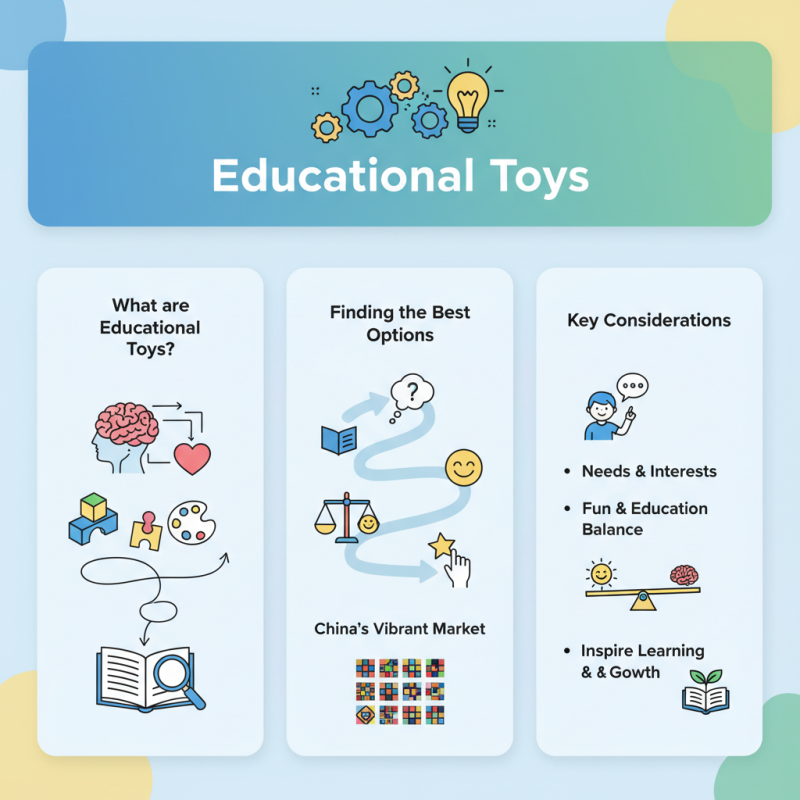
In the colorful world of childhood learning, educational toys play a pivotal role. But what are educational toys? According to Dr. Sarah Thompson, an expert in child development, “Educational toys are tools that stimulate learning while engaging children’s imaginations.” With this in mind, parents often seek the best options, especially in China’s vibrant market.
Educational toys are designed to foster cognitive skills, creativity, and critical thinking. They come in various forms, from building blocks to interactive learning games. However, finding the right toy can be overwhelming. Many products claim to be educational, but not all deliver significant benefits. It’s essential to discern which toys truly support learning and development.
Moreover, while many educational toys provide enrichment, some may oversell their value. Parents should carefully consider the needs and interests of their children. Striking the right balance between fun and education is crucial. Ultimately, the best educational toys are those that not only entertain but also inspire learning. Reflecting on these choices can guide parents to make informed decisions in fostering their children’s growth.
China's Educational Toys Market Overview and Growth Statistics
China's educational toys market has experienced significant growth. In recent years, the market value surpassed $15 billion, reflecting a compound annual growth rate (CAGR) of over 10%. This growth is driven by a rising awareness of the importance of early childhood education among parents. As families invest more in educational tools, the demand for innovative and engaging toys has surged.
The market is diverse, encompassing categories like STEM toys, language development toys, and creative play items. A report indicated that the STEM segment alone accounted for around 30% of total sales in the past year. Parents seek products that not only entertain but also foster critical thinking and problem-solving skills. Many toys emphasize hands-on learning, stimulating curiosity and creativity in children.
However, challenges still exist. Not all toys meet educational standards. Some do not align with developmental milestones. Parents often feel overwhelmed by the sheer volume of options. They may struggle to choose toys that truly enhance learning. A discerning approach is necessary to navigate this complex market.
China Best Educational Toys - Market Overview and Growth Statistics
| Category |
Market Size (2023) |
Growth Rate (CAGR) |
Popular Age Group |
Key Features |
| STEM Toys |
$1.5 Billion |
15% |
6-12 Years |
Encourages critical thinking, problem-solving |
| Language Learning Toys |
$800 Million |
10% |
3-7 Years |
Interactive learning, bilingual options |
| Creative Arts & Crafts |
$600 Million |
12% |
4-10 Years |
Fosters creativity, fine motor skills |
| Puzzle and Board Games |
$1 Billion |
8% |
5-12 Years |
Enhances social skills, teamwork |
| Outdoor Educational Toys |
$900 Million |
9% |
2-8 Years |
Encourages physical activity, exploration |
Key Factors Driving the Popularity of Educational Toys in China
Educational toys have gained immense popularity in China due to several key factors. Parents increasingly recognize the importance of early childhood development. These toys engage children in learning through play, which is a natural way for them to absorb new skills. They help in cognitive, physical, and emotional growth. The hands-on experience fosters a deep understanding of various concepts.
Another driving force behind their rising popularity is the emphasis on STEM education. Many toys support science, technology, engineering, and mathematics learning. Children can explore these subjects at an early age. This not only boosts interest but also prepares them for future academic challenges. Additionally, creativity is a major focus. Toys that inspire imaginative play enhance problem-solving skills and encourage independent thinking.
Despite this positive trend, there are challenges. The market is flooded with options, making it hard for parents to choose wisely. Some toys may lack educational value, leading to confusion. It's important for parents to research and assess whether a toy aligns with their child’s learning style. This careful evaluation can ensure that educational toys truly serve their intended purpose.
Popularity of Educational Toys in China
Top Categories of Educational Toys: STEM, Creative Play, and More
When considering the best educational toys, it’s essential to focus on key categories like STEM, creative play, and more. Recent reports indicate that the global educational toys market is projected to grow significantly, reaching around $80 billion by 2025. This growth highlights the increasing demand for toys that stimulate creativity and learning in children.
STEM toys are particularly popular. These toys encourage children to explore science, technology, engineering, and math concepts. According to a 2022 study, 75% of parents noted that STEM toys enhanced their children's problem-solving skills. Interactive kits, like building sets and robotic toys, promote critical thinking. However, not all toys effectively encourage these skills. Parents must research options thoroughly.
Creative play toys, such as art sets and building blocks, offer additional benefits. A survey found that 65% of children who engage in creative play show improved social skills. These toys foster imagination but often come with varying quality levels. While some toys inspire creativity, others may not meet developmental needs. This issue highlights the importance of choosing wisely. Parents should focus on age-appropriate, high-quality options for maximum impact on their children's learning experience.
Consumer Preferences: What Parents Look for in Educational Toys
When it comes to choosing educational toys, parents prioritize several key factors. A recent survey reveals that 75% of parents consider safety and non-toxic materials essential. They seek toys that not only entertain but also facilitate learning and development. This trend aligns with the increasing emphasis on STEM (science, technology, engineering, and mathematics) education in early childhood. Parents often look for toys that encourage critical thinking and problem-solving skills.
Another important factor is age appropriateness. Research shows that 68% of parents prefer toys that are tailored to their child’s developmental stage. Toys must challenge children without causing frustration. This balance is crucial for engaging children and fostering their intrinsic motivation to learn. Parents also appreciate toys that promote creativity and social interaction. However, it’s important to note that not all toys deliver these qualities effectively. Some may overpromise cognitive benefits yet fail to captivate children's attention.
Furthermore, many parents express concern over the overstimulation from flashy toys. A report indicates that 57% of parents are wary of toys with too many lights and sounds. Instead, they gravitate towards simpler, open-ended toys that encourage imaginative play. These preferences indicate a shift towards mindful consumption in the educational toy market, urging manufacturers to consider not only educational value but also the overall experience of play.
Impact of Educational Toys on Child Development: Research Findings
Educational toys play a significant role in child development. Research indicates that these toys enhance cognitive skills, motor skills, and social interaction. For instance, puzzles encourage problem-solving abilities. Children learn to think critically while having fun. Building blocks foster creativity and spatial awareness. These activities lay a strong foundation for future learning.
Moreover, educational toys promote emotional intelligence. When children engage with peers, they learn cooperation and patience. This type of play is crucial for social skills. However, the selection of toys is important. Not all toys labeled as "educational" serve a meaningful purpose. Parents must assess whether a toy truly challenges and engages their child.
Quality matters too. Cheap materials can lead to frustration and disengagement. Reflecting on your child's interests can help guide you. Encourage exploration through various toy types. This experimentation fosters adaptability and resilience. Overall, educational toys are beneficial, but thoughtful selection ensures the best outcomes.
FAQS
: Parents value early childhood development. They engage kids in learning through play, enhancing cognitive and emotional growth.
These toys introduce science, technology, engineering, and mathematics concepts. They prepare children for academic challenges early on.
Safety and non-toxic materials are priorities. Parents want toys that entertain and enhance learning experiences.
Age-appropriate toys are crucial. They should challenge kids without causing frustration, fostering motivation to learn.
Parents are wary of overstimulation. Many avoid flashy toys with excessive sounds and lights in favor of simpler options.
They promote emotional intelligence. Kids learn cooperation and patience through play, enhancing their social interaction abilities.
Cheap materials can frustrate kids. High-quality toys engage children better and support their learning journeys effectively.
No, not all toys labeled as "educational" provide value. Parents must evaluate if they truly engage and challenge their child.
Reflecting on a child's interests is key. Encouraging experimentation with different types of toys fosters adaptability and resilience.
The overwhelming variety can confuse parents. Careful research is essential to ensure toys meet their child’s learning style.
Conclusion
The article titled "China Best Educational Toys: What are the Best Options?" examines the rapid growth of China's educational toys market and highlights significant statistics that indicate this trend. Key factors driving the popularity of educational toys in China include increased parental awareness of child development and the rising demand for toys that promote learning through play. The article categorizes the main types of educational toys, such as STEM toys and those focused on creative play, showcasing the diversity in consumer preferences.
Furthermore, the article discusses what are educational toys and emphasizes their impact on child development. Research findings reveal that these toys not only enhance cognitive skills but also foster creativity and problem-solving abilities in children. Parents increasingly prioritize educational value when selecting toys, making informed choices that align with developmental benefits and long-term learning outcomes.

 Toym Toy