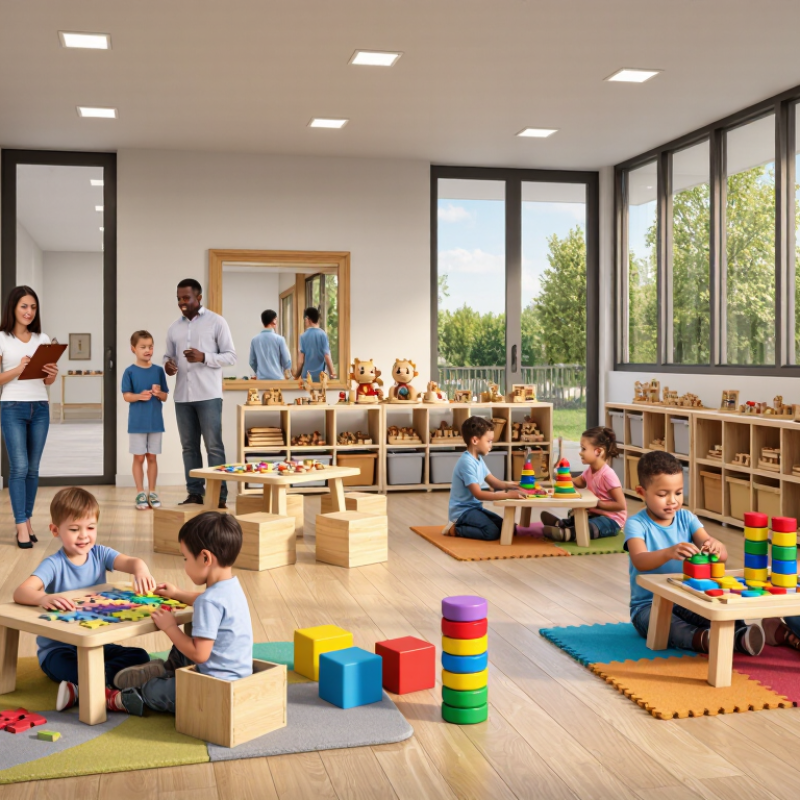
Choosing educational toys for wholesale buyers requires more than checking age labels or colorful packaging. It requires a clear understanding of what are educational toys and how children actually use them. Educational toys should encourage meaningful skills, such as problem-solving, language, coordination, creativity, or social interaction. A puzzle with thick wooden pieces may support fine-motor control. A counting game may introduce early numeracy through hands-on play. The learning should feel natural, not forced.
Dr. Susan Linn, a psychologist and leading expert on children’s play, has said, “Play is not a luxury. Play is a necessity.” This principle matters to wholesale buyers. A product can claim educational value, but children may ignore it after five minutes. That is a warning sign. Buyers should examine durability, safety information, material quality, instructions, and realistic play value before placing large orders. A toy should survive repeated handling, spilled juice, and imperfect storage. Children are not careful testers.
Market demand also matters. Parents and educators increasingly seek toys that combine learning with independent play. However, no toy teaches every child in the same way. Wholesale decisions should include product samples, age-appropriate testing, supplier verification, and feedback from teachers or families. Some products may look impressive online but feel disappointing in real hands. That happens. A thoughtful buyer leaves room for revision.
The strongest educational toy ranges balance developmental purpose, enjoyable design, dependable construction, and responsible sourcing. This guide explains how wholesale buyers can assess those qualities before investing in inventory.
Understanding the Educational Toy Wholesale Market
Understanding the Educational Toy Wholesale Market
Educational toy wholesale buying starts with market evidence, not attractive packaging. Study who will use the toys: schools, learning centers, retailers, or parents. Each group expects different prices, quantities, and learning outcomes. In my purchasing experience, classroom buyers often value durability over novelty. Retailers may prefer compact products with clear age guidance. Review sales data, seasonal demand, and customer questions before selecting a product range. A colorful toy can still fail if it lacks a practical learning purpose.
Examine materials, construction, instructions, and safety documentation carefully. Ask suppliers for samples before discussing large orders. Test moving parts, storage boxes, labels, and cleanup requirements. Check whether the product supports skills such as counting, fine motor control, language, or problem-solving. Calculate the landed cost, including packaging, shipping, inspection, and possible returns. I once underestimated packaging volume, and the final margin became disappointing. That mistake still influences my purchasing decisions. Market research is useful, but it cannot replace hands-on evaluation.
Tips:
Compare at least three suppliers. Request consistent sample specifications. Confirm minimum order quantities and lead times. Check applicable safety requirements in each target market. Ask educators for feedback. Avoid products with exaggerated learning claims. A simple sorting set may outperform a complicated electronic toy because teachers can use it repeatedly. Wholesale buyers should also review reorder potential, not only first-order excitement. Some product choices will be imperfect. Record the reasons, measure results, and adjust the next purchase.
Defining Buyer Needs and Target Age Groups
Wholesale buyers should define their customers before choosing educational toys. A preschool supplier may need chunky puzzles, stacking pieces, and washable surfaces. A learning center for older children may prefer science kits, logic games, or beginner coding tools. Ask where the toys will be used, who supervises play, and how often products must survive handling.
Age groups should guide every specification. Toys for ages three to five need large pieces, simple controls, and clear visual instructions. Products for ages six to eight can include reading tasks, measurement, and short problem-solving challenges. Older children often expect deeper rules, adjustable difficulty, and realistic feedback. Check safety documentation, material information, and age labels before placing a large order. These records support responsible purchasing and help staff answer customer questions.
Do not trust age ranges alone. A five-year-old may solve advanced puzzles, while another child may need more guidance. I have seen buyers choose attractive sets that were too difficult for their main audience. That mistake created returns and unused inventory. A small sample order can reveal grip size, assembly time, noise levels, and classroom durability. Test the toy with real users when possible. Their reactions may challenge your assumptions. Keep the lessons clear, but leave room for curiosity and different learning speeds.
Evaluating Safety, Quality, and Educational Value
Wholesale buyers should treat safety as a purchasing requirement, not a marketing claim. The U.S. Consumer Product Safety Commission reported more than 230,000 toy-related emergency department injuries in 2023. Request current test reports for small parts, magnets, flammability, sharp edges, and chemical migration. Check whether products meet recognized standards, such as ASTM F963 or ISO 8124. Review age grading carefully. A label cannot replace physical inspection.
Quality also appears in ordinary details. Examine seams, battery compartments, paint coverage, hinges, and instruction clarity. Ask suppliers for material specifications, batch records, and traceability documents. Sample products from different production lots. One perfect sample proves little.
The OECD’s PISA-related research consistently connects active engagement and problem-solving with stronger learning outcomes, but educational value is not guaranteed by colorful packaging. Choose toys that invite sorting, building, role-play, movement, or open-ended questions. Children should be able to use them in more than one way.
Keep the learning goal visible. A counting toy should support real counting, not only button pressing. The American Academy of Pediatrics recommends simple, hands-on toys that encourage caregiver-child interaction. In wholesale evaluation, observe whether the toy supports conversation, cooperation, and independent exploration. I would still question impressive claims. Some educational labels are vague. Ask for age-specific evidence, educator feedback, and clear play instructions before committing to volume. Small usability problems can become expensive returns.
Comparing Suppliers, Costs, and Minimum Order Quantities
When choosing educational toys for wholesale, compare suppliers beyond the quoted unit price. I usually request samples from at least three factories. This reveals differences in plastic strength, paint coverage, instructions, and packaging quality. A low price can hide weak cartons or frequent defects. Ask for production photos, testing records, material details, and clear age recommendations. Reliable suppliers answer specific questions without avoiding uncomfortable details.
Calculate the complete cost per sellable unit. Include the toy, packaging, tooling, inspection, freight, insurance, duties, and expected defect allowance. For example, a 2.20-dollar toy may cost 3.10 dollars after shipping and inspection. Compare quotes using identical quantities and delivery terms. Prices can look attractive when one supplier excludes important charges. Request a written quotation with currency, validity period, payment schedule, and lead time. Keep records.
Minimum order quantity deserves equal attention. A 5,000-unit MOQ may reduce the unit price but tie up cash and storage space. A 500-unit trial order costs more per piece, yet it limits inventory risk. Ask whether suppliers permit mixed colors, assorted learning themes, or staged deliveries. Negotiation is possible. Not always. Some factories need fixed carton quantities because loose packing increases handling errors. I once focused too heavily on price and underestimated warehouse space. That mistake changed my comparison sheet. Wholesale buyers should review sample quality, landed cost, MOQ flexibility, and reorder speed together. A supplier with a slightly higher price may become cheaper when defects and delays are included.
How to Choose Educational Toys for Wholesale Buyers?
This indicative benchmark compares typical wholesale sourcing models. Factory-direct suppliers generally offer the lowest unit cost but require larger minimum orders, while small-batch specialists provide lower MOQs with a higher per-unit cost. Buyers should compare landed cost, quality requirements, lead time, and order flexibility before selecting a supplier.
Managing Product Selection, Compliance, and Inventory Planning
Wholesale buyers should select educational toys by learning value, age suitability, and repeat-purchase potential. A counting set should support clear skills, not merely contain bright colors. Check whether pieces fit comfortably in a child’s hand. Review durability after repeated use, rough handling, and classroom cleaning. I once approved a visually attractive puzzle that lacked replacement pieces. That decision created unnecessary customer complaints.
Compliance must guide selection before price negotiations begin. Request material specifications, test reports, labeling samples, and production-batch records from suppliers. Confirm age grading, warning statements, small-part controls, and surface safety requirements for each destination market. Requirements can differ between countries and change over time. Verify current rules through official authorities or qualified testing laboratories. Paperwork alone is not enough. Ask how suppliers control quality during production, not only before shipment.
Inventory planning connects product choice with cash flow. Estimate seasonal demand using past sales, school calendars, and customer pre-orders. Record carton dimensions, minimum order quantities, lead times, and available storage space. Set a reorder point before stock becomes uncomfortable. A simple formula can help: average weekly sales multiplied by lead time, plus safety stock. However, forecasts remain imperfect. A new toy may sell slowly despite strong test results. Start with a controlled quantity, monitor returns and feedback, then adjust the next purchase. Keep slow-moving items visible, because forgotten inventory can quietly become the most expensive lesson.
FAQS
Request current reports covering small parts, magnets, flammability, sharp edges, and chemical migration. Check recognized safety standards and age grading. A label cannot replace physical inspection.
One perfect sample proves little. Compare samples from different lots for seams, paint coverage, hinges, and battery compartments. Small defects can become expensive returns.
Look for sorting, building, role-play, movement, and open-ended questions. Colorful packaging proves nothing. The toy should support several kinds of play.
Ask for age-specific evidence, educator feedback, and clear play instructions. Watch children use the product, if possible. Impressive wording can remain vague.
It should support real counting, not only button pressing. Look for objects children can touch, group, and count aloud. The goal must remain visible.
Request samples from at least three suppliers. Compare plastic strength, instructions, packaging, defects, and response quality. Specific answers matter.
Include the toy, packaging, tooling, inspection, freight, insurance, duties, and expected defects. A $2.20 toy might reach $3.10 after extra costs.
A 5,000-unit order may lower prices but consume cash and storage space. A 500-unit trial costs more per piece. It limits inventory risk.
Confirm currency, quotation validity, payment schedule, lead time, delivery terms, and reorder speed. Ask about mixed colors and staged deliveries. Keep records.
Yes, when fewer defects and faster delivery reduce total costs. I once focused too heavily on price. That mistake changed my comparison sheet.
Conclusion
Choosing the right educational toys for wholesale buyers requires a clear understanding of the market, customer expectations, and product purpose. Before purchasing, buyers should define their target age groups, learning goals, and preferred categories, while asking, “what are educational toys?” In general, they are products designed to support children’s cognitive, creative, physical, social, or problem-solving development through play. A well-planned product range should match the needs of retailers, families, schools, or other intended customers.
Buyers should carefully evaluate toy safety, material quality, durability, age suitability, and educational value. Comparing suppliers involves reviewing pricing, production capacity, communication, lead times, and minimum order quantities rather than focusing only on the lowest cost. It is also important to confirm that products meet applicable safety and labeling requirements in the target market. Finally, buyers should select products with balanced variety, estimate demand, plan seasonal purchasing, and manage inventory carefully to reduce overstock while maintaining reliable availability.

 Toym Toy