How Do Educational Toys Boost Child Development Effectively?

Time:2026-06-09 Author:Sienna
0%

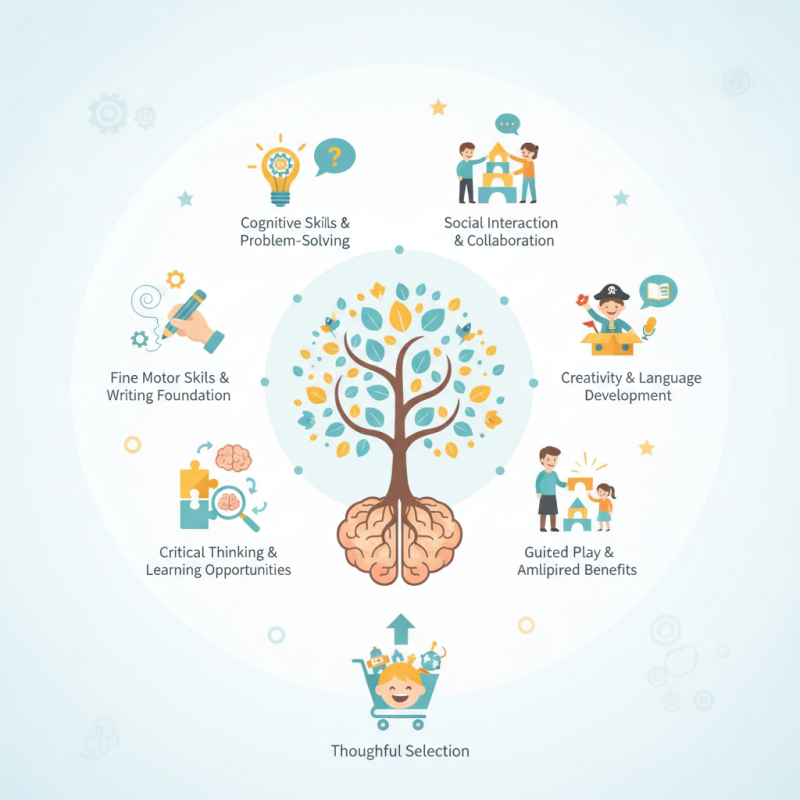
Educational toys play a vital role in child development. They foster creativity, enhance cognitive skills, and promote social interactions. A report from the American Academy of Pediatrics highlights that engaging with educational toys can significantly improve problem-solving abilities in children aged 2 to 5 years. According to Dr. Sarah Johnson, an expert in child psychology, "how do educational toys help child development? They create unique learning opportunities."

Research indicates that toys designed for learning can provide substantial benefits. For example, interactive toys can enhance fine motor skills. Children learn to grasp and manipulate objects, laying the foundation for writing. Additionally, toys that encourage imaginative play help develop language skills. However, not all toys have equal impact. Parents must reflect on their choices to ensure toys are developmentally appropriate.

Beyond basic skills, educational toys can facilitate social learning. Group play fosters collaboration and communication among peers. Yet, it's essential for caregivers to engage with children during play. This interaction can amplify the benefits of educational toys. Overall, selecting the right educational toys is crucial for supporting child development effectively.
How Do Educational Toys Boost Child Development Effectively?

Types of Educational Toys and Their Purpose in Learning

Educational toys are designed to foster a child's cognitive and social development. They come in various types, each serving a unique purpose in the learning process. For instance, building blocks enhance spatial skills, while puzzles develop problem-solving abilities. According to a report from the American Academy of Pediatrics, engaging with educational toys can significantly improve crucial skills in children aged 3 to 5. This age group shows a 30% increase in creativity when using imaginative playsets.

STEM toys, focusing on science, technology, engineering, and math, are growing in popularity. Research from the National Association for the Education of Young Children suggests that children engaging with STEM toys improve critical thinking skills by 25%. These toys encourage experimentation and hands-on learning. However, not all educational toys are equal. Some may oversimplify concepts, leading to confusion rather than clarity. The balance between challenge and playfulness is essential for effective learning.

Art and craft supplies also play a significant role in child development. They stimulate fine motor skills and creativity. A study by the Joan Ganz Cooney Center highlighted that children who regularly engage in art activities are more likely to excel in verbal communication. While these toys encourage expression, parental guidance is often necessary to direct the focus. This dynamic presents an area for reflection in choosing the right educational tools for your child’s growth.

How Do Educational Toys Boost Child Development Effectively?

Type of Educational Toy Purpose in Learning Key Developmental Areas Recommended Age
Building Blocks Encourages creativity and spatial awareness Cognitive Development, Fine Motor Skills 2-5 years
Puzzles Enhances problem-solving skills Cognitive Development, Critical Thinking 3-7 years
Musical Instruments Fosters an appreciation for music and rhythm Auditory Skills, Emotional Development 3-10 years
Science Kits Stimulates curiosity about the natural world Scientific Thinking, Inquiry Skills 8+ years
Art Supplies Encourages self-expression and creativity Creative Skills, Emotional Development All ages

Cognitive Benefits of Educational Toys in Early Childhood Development

Educational toys play a crucial role in the cognitive development of children. They stimulate curiosity and encourage exploration. When children engage with toys designed for learning, they develop essential problem-solving skills. For instance, puzzles challenge a child to think critically as they piece together shapes. This process enhances their spatial awareness and logical reasoning.

Through imaginative play, kids learn to express themselves. Role-playing with educational toys fosters creativity and helps them understand social interactions. They explore emotions and empathy, building their emotional intelligence. In this way, toys do not just entertain. They lay a foundation for future learning.

Nonetheless, not all toys guarantee cognitive benefits. Some may distract rather than engage. Choosing the right ones requires careful thought. Educators and parents should assess toys based on age appropriateness and developmental goals. This not only maximizes benefits but also supports a child's unique learning journey. Balancing playtime with structured learning experiences is vital for effective growth.

Physical Development Stimulation Through Interactive Learning Toys

Interactive learning toys offer unique benefits for children's physical development. These toys encourage active play, allowing children to engage their muscles while having fun. For instance, climbing structures and balance beams promote gross motor skills. When children navigate these challenges, they enhance coordination and balance in a playful environment.

Moreover, toys that require manipulation, such as building blocks or construction kits, stimulate fine motor skills. Grasping, stacking, and fitting pieces together develop hand-eye coordination. Children learn how to control their movements, which is essential for tasks like writing or using utensils.

However, it is crucial to choose appropriate toys. Some products may not provide enough stimulation. A toy that is too simple can lead to boredom. Parents should seek out those that challenge their child while still being age-appropriate. Observation is key—watching how a child interacts with a toy can provide insights into their developmental needs. Engaging with children during play also enhances the learning experience.

Social Skills Enhancement via Collaborative Educational Play

Collaborative educational play serves as a vital gateway for children to enhance their social skills. When children engage in group play, they learn to communicate effectively, share resources, and collaborate on projects. This natural interaction promotes understanding and empathy, essential components for building relationships. Children start to recognize diverse perspectives, which is crucial for their emotional growth.

Tips for fostering social skills during playtime include setting clear group objectives. Encourage children to discuss their ideas and agree on roles. This allows them to express thoughts and practice negotiation. It's also beneficial to create a safe environment where making mistakes is acceptable. This teaches resilience and problem-solving. These moments of trial and error can transform into powerful learning experiences.

Additionally, observe your child's interactions. Are they taking turns? Are they listening to others? These questions can guide your understanding of their social development. Not all children will respond the same way in play. Some may struggle initially to fit in. Recognizing these differences is important. Adjust your approach based on each child's needs, promoting an inclusive atmosphere that values every participant’s input.

Choosing the Right Educational Toys for Optimal Child Growth

Choosing the right educational toys is crucial for a child's growth. Various types of toys target different developmental areas. For cognitive skills, puzzles and building sets encourage problem-solving and spatial awareness. These toys require children to think critically as they figure out how pieces fit together.

When considering social skills, cooperative games are a great choice. These toys often involve multiple players. They teach sharing and teamwork, which are vital in early childhood. However, some toys may lack complexity. They can become boring too quickly, stifling potential learning opportunities.

Physical development also benefits from active play. Toys that require movement promote coordination and strength. Balance boards or simple balls are excellent examples. Yet, parents need to ensure safety. Sometimes, a well-intentioned toy can lead to accidents. Careful selection minimizes these risks while maximizing benefits. Observing how children interact with their toys can reveal much about their interests and needs.

FAQS

: What are educational toys designed for?

: They aim to foster cognitive and social development in children.

How do building blocks help children?

They enhance spatial skills and encourage critical thinking during play.

What benefits do STEM toys provide?

They improve critical thinking skills and encourage hands-on experimentation.

Why is parental guidance important with art supplies?

It helps direct focus and maximize creativity in children.

Can all educational toys guarantee cognitive benefits?

No, some may distract children rather than engage them effectively.

What should parents consider when choosing toys?

Age appropriateness and developmental goals are key factors to assess.

How do cooperative games contribute to child development?

They teach sharing and teamwork by involving multiple players.

What role does physical play have in development?

It promotes coordination and strength, benefiting physical health.

How can selecting the wrong toy impact a child?

A boring toy may stifle learning opportunities and cause frustration.

What can observing toy interaction reveal?

It shows children's interests and needs, guiding future toy selections.

Conclusion

Educational toys play a vital role in child development by fostering various skills and abilities essential for growth. They come in diverse types, each crafted to serve specific educational purposes. For instance, toys that encourage problem-solving enhance cognitive function, while interactive learning toys promote physical development through active engagement. Furthermore, collaborative educational play not only aids in social skills enhancement but also nurtures teamwork and communication among peers.

Understanding how do educational toys help child development involves recognizing their multifaceted benefits. These toys stimulate cognitive, physical, and social development, shaping well-rounded individuals. By choosing the right educational toys, parents can create an enriching environment that supports optimal growth, enabling children to explore their creativity, develop critical thinking, and build meaningful relationships during their formative years.

Sienna

Sienna

Sienna is a skilled marketing professional with a deep expertise in our company’s core products and services. With a passion for innovation and detail, she plays a pivotal role in crafting insightful blog posts that not only highlight the unique features of our offerings but also provide valuable......