Educational toys are not simply colorful distractions; they can turn ordinary play into purposeful learning. A wooden puzzle may strengthen spatial reasoning as a child tests each piece. A counting game can make numbers visible through buttons, cards, or small blocks. In classrooms and homes, adults often notice learning before children can explain it. Still, one toy cannot create lifelong curiosity alone. Good guidance matters.
This introduction explores how educational toys support lifelong learning across different ages and abilities. The focus is practical: choosing open-ended materials, encouraging questions, and allowing children to solve problems independently. Educators and child-development specialists commonly emphasize active play, repetition, feedback, and age-appropriate challenge. These principles connect play with transferable skills, including persistence, communication, creativity, and self-regulation. A child who rebuilds a fallen tower is practicing more than balance. They are learning to revise an idea.
The seven tips will also consider safety, inclusion, screen balance, and adult involvement. A reliable recommendation should fit the child, not merely follow a popular label. Observe how the toy is used. Does it invite conversation? Can its difficulty grow? Does it remain engaging after the novelty fades? Evidence can guide decisions, yet families may see results differently. Some children need quiet solo play; others learn through shared experiments. That difference deserves respect. Lifelong learning begins with curiosity, but it develops through meaningful choices, patient support, and room for mistakes. Perhaps the most useful toy is not the most advanced one. It may be the simple object that keeps a child asking, “What happens if I try again?”
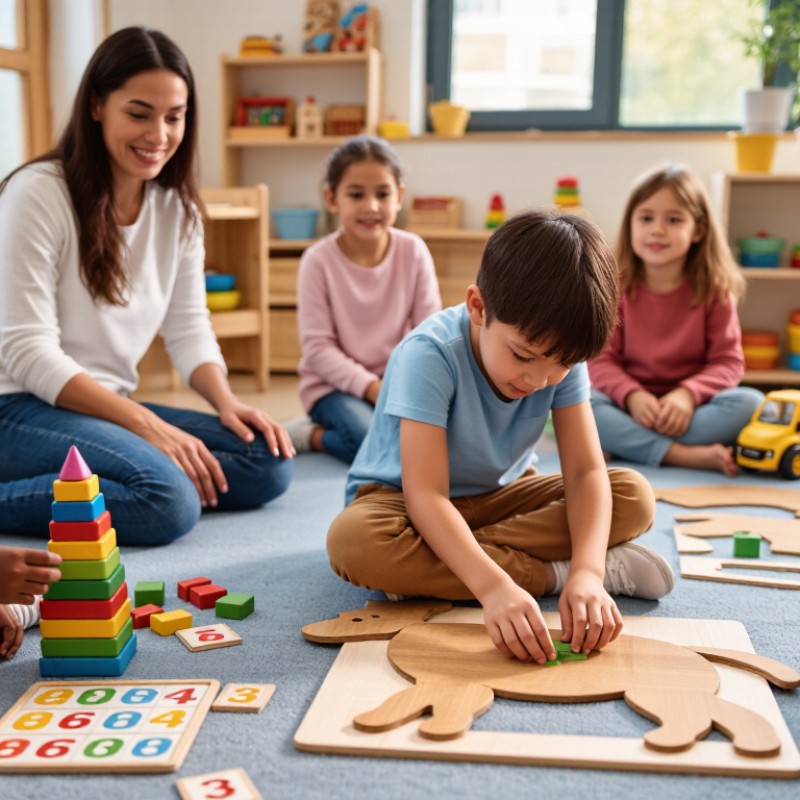
UNICEF reports that about 90% of brain development happens by age five. This early period shapes language, attention, memory, and social understanding. Educational toys can support these abilities through playful practice. They do not replace caring adults, conversation, sleep, or real-world experiences.
Choose toys that allow more than one answer. Blocks can become bridges, shops, or animal homes. Puzzles can build patience and visual reasoning. Select materials suited to the child’s age, but avoid making play too easy. Let the child lead. Ask open questions, such as, “What could we try next?” Add counting, storytelling, drawing, movement, and simple problem-solving. Repeat favorite games, because repetition strengthens confidence and flexible thinking.
Keep screens and instructions from controlling every moment. Quiet play matters too. Watch closely. A child’s mistake may reveal a useful learning need. Some days, the carefully chosen toy will be ignored. That is normal. Adults can become too focused on visible results. A child who invents a new rule may be learning more than one who completes the activity perfectly. Educational play works best when adults offer safe materials, patient guidance, and room for curiosity to grow.
Open-ended toys have no single correct result. Blocks become a bridge, shop, or animal shelter. This freedom makes children plan, adjust, and explain their choices. The American Academy of Pediatrics states that play supports executive function, language, social skills, and emotional regulation. These skills help children manage attention and solve unfamiliar problems later.
The OECD’s 2020 Early Learning and Child Well-being report assessed nearly 18,000 five-year-olds across 17 countries and economies. It connected early learning with children’s social-emotional and emerging cognitive skills. Open-ended play gives those skills a visible setting. A child may sort buttons by color, abandon the plan, then build a “road” across the carpet. Small decisions matter.
Adults should avoid turning every toy into a lesson. Ask, “What could this become?” Then wait. That pause can feel unproductive. Sometimes it is. A child may repeat the same tower for ten minutes, or reject the activity completely. That does not prove the toy failed. It may show that the challenge, materials, or timing needs adjustment. AAP guidance also encourages adults to join play without controlling it, leaving room for mistakes, negotiation, and surprisingly complex ideas.
Educational toys can turn early curiosity into durable learning habits. OECD research links quality early-childhood education with stronger later academic outcomes. In PISA 2022, students who attended early childhood education generally performed better in mathematics than those who did not, even after accounting for social background. The relationship is meaningful, but it is not proof that toys alone cause achievement. Home support, teaching quality, health, and opportunity also matter.
The OECD’s Education at a Glance reports that participation in early learning is widespread across member economies, yet access and quality remain uneven.
Tip 1: Choose toys that invite questions, not one correct answer. Building blocks can develop spatial reasoning and planning.
Tip 2: Add simple STEM challenges, such as building a bridge for three toy animals.
Tip 3: Ask “What might happen?” before children test an idea. Mistakes become visible evidence.
Tip 4: Let children explain their designs using drawings, numbers, or gestures.
Tip 5: Match difficulty to the child’s current ability, then increase one feature. Add weight, height, or a time limit.
Tip 6: Connect play with daily life, such as measuring water while cooking.
Tip 7: Observe rather than interrupt. A child quietly sorting buttons may be practicing classification, persistence, and early data thinking. Adults should record what worked and what failed. That reflection is imperfect, but useful.
7 Tips on How Educational Toys Support Lifelong Learning?
The World Health Organization reports that 81% of school-going adolescents aged 11–17 do not achieve enough physical activity. This estimate comes from a WHO-led analysis published in The Lancet Child & Adolescent Health. WHO recommends an average of 60 minutes of moderate-to-vigorous activity daily. Educational toys cannot replace sports, but they can make movement social, playful, and easier to begin.
Choose cooperative building games that require shared planning. Add movement challenges, such as carrying pieces across a room. Use role-play sets to practice negotiation, listening, and emotional expression. Try outdoor scavenger games with simple counting tasks. Keep rules flexible. Children often learn more when they can adjust them together. Small groups work well, especially when every child receives a clear role. A timer, picture cards, or colored objects can create structure without making play feel like a lesson.
Parents and teachers should observe behavior, not only completed projects. Does a quiet child speak more during team play? Does a frustrated child try again? These details matter. The OECD’s PISA 2018 findings linked stronger cooperation and emotional openness with more positive school experiences, though such relationships do not prove that toys cause better outcomes. That limitation deserves attention. Some toys may exclude children through complex rules, noise, or limited accessibility. Choose materials that invite conversation, movement, and shared problem-solving. Keep screens from becoming the only social tool.
Educational toys can support lifelong learning when play changes with the child. Match each toy to current abilities, not only the age printed on its box. UNICEF’s Learning through Play report identifies joyful, active, iterative, and social play as key learning conditions. Choose one target, such as counting, balance, storytelling, or turn-taking. Watch the hands. Notice whether the child repeats actions, asks questions, or quits quickly. Record these details after each session. A simple note, such as “built a bridge with four blocks,” is more useful than a vague score.
Track progress with evidence-based measures, but keep them modest. The World Health Organization’s 2019 guidelines recommend at least 180 minutes of daily physical activity for children aged two to four. A construction set can support this goal when children carry pieces, squat, reach, and rebuild. Use a weekly checklist for time, independence, language, and problem-solving. OECD’s PISA 2022 findings connect reading enjoyment with stronger reading performance, while noting that correlation does not prove causation. Story cards and pretend-play props may encourage this habit, but results will vary.
Adapt the challenge gradually. Add one rule, reduce one hint, or introduce a timer. Rotate materials before interest disappears. Ask the child to explain a choice. My early mistake was praising finished products instead of useful effort. That can reward speed over thinking. Review notes every two weeks, then simplify or extend the play. Keep the measure visible, brief, and honest. Try again.
About 90% of brain development occurs by age five. Play supports language, attention, memory, social understanding, and flexible thinking.
Choose toys with several possible answers. Blocks may become bridges, shops, or animal homes. Open-ended play encourages questions and imagination.
Let the child lead. Ask, “What could we try next?” Offer patient guidance without controlling every move. Conversation matters.
Try a simple challenge, such as building a bridge for three toy animals. Ask what might happen before testing the design.
No. Mistakes provide useful evidence about a child’s thinking. A collapsed tower may show problems with balance, weight, or planning.
Match the activity to the child’s current ability. Then add one feature, such as height, weight, or a short time limit.
Yes. Children can measure water while cooking, sort buttons by color, or count steps across a room. Ordinary moments can be powerful.
No. Research connects quality early learning with later achievement, but toys alone do not prove causation. Health, teaching, support, and opportunity also matter.
Not every moment. Quiet play deserves space. Some days, a carefully chosen toy will be ignored. That is normal.
Record what worked and what failed. Notice repeated games, new rules, drawings, gestures, and persistence. The record may be incomplete, but useful.
Educational toys can play a meaningful role in shaping curiosity, confidence, and adaptable thinking from early childhood onward. Since much of the brain’s development occurs by age five, playful learning provides an important foundation for lifelong learning. Open-ended toys encourage children to imagine, experiment, solve problems, and practice executive-function skills rather than simply follow fixed instructions. Through building, sorting, questioning, and creating, children gradually develop STEM-related thinking and connect early abilities with future academic achievement.
Play also supports communication, cooperation, self-control, and empathy, helping children build stronger social-learning habits at a time when many adolescents do not get enough physical activity. To understand how educational toys support lifelong learning, adults should choose materials that match a child’s age and interests, observe progress, and adjust activities as abilities grow. Evidence-based measures, such as tracking problem-solving, persistence, creativity, and collaboration, can make play more purposeful while preserving its joy and freedom.
