Why Are Educational Toys Important for Child Development?

Time:2026-06-16 Author:Amelia
0%

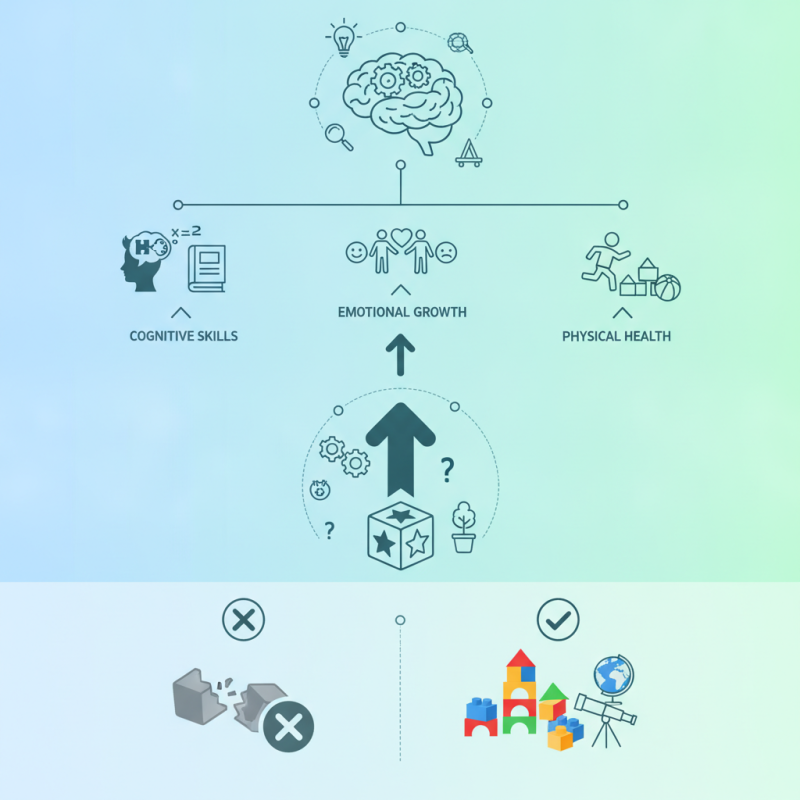
In recent years, the significance of educational toys has gained traction among parents and educators alike. The question of "why are educational toys important?" is essential for understanding child development. According to a report by the American Academy of Pediatrics, play is crucial for childhood development, fostering cognitive skills, emotional growth, and physical health. Educational toys act as effective tools to facilitate this play, helping children learn while they engage.

Dr. David Elkind, a noted child psychologist, emphasizes, “Play is the highest forms of research.” His insight underlines the role of toys that challenge and inspire children to explore. A study in the Journal of Educational Psychology found that children who engage with educational toys show improved problem-solving skills compared to their peers. This highlights how these toys can be more than just entertainment—they can enhance learning outcomes.

Despite the clear benefits, it is crucial to reflect on not all toys labeled as educational deliver. Some fail to engage children's imagination, while others may not align with developmental needs. Choosing the right educational toys requires careful consideration, as the effectiveness can vary widely. Nonetheless, understanding why educational toys are important can guide parents in making informed decisions that support their child's growth and curiosity.
Why Are Educational Toys Important for Child Development?

The Role of Educational Toys in Promoting Cognitive Skills

Educational toys serve a crucial role in promoting cognitive skills among children. According to a study published by the American Academy of Pediatrics, play with educational toys enhances problem-solving abilities and fosters creativity. These toys encourage children to explore concepts such as cause and effect, which are fundamental for cognitive development. Engaging with puzzles, building blocks, and art supplies allows children to test their ideas and strengthen their reasoning skills.

Incorporating educational toys into daily play can significantly impact learning outcomes. Research from the University of Georgia indicates that children who regularly play with these toys develop better memory and attention skills. Simple toys that allow for open-ended play can often lead to more complex thinking. For instance, a set of building blocks can lead to imaginative creations while simultaneously improving spatial awareness.

Tips: Choose toys that challenge your child without causing frustration. Look for items that allow creativity and exploration. Regularly rotating toys can keep playtime fresh and engaging, stimulating different areas of cognitive development. Remember, not every child will respond equally to every toy; observe and adapt to their preferences for the best outcomes.

How Educational Toys Foster Emotional and Social Development

Educational toys play a pivotal role in fostering emotional and social development in children. These toys provide a platform for interaction and engagement, helping children understand their feelings and those of others. According to the American Academy of Pediatrics, play helps children develop social skills through cooperative play and shared experiences. Children learn to express their emotions and negotiate their needs while enjoying educational activities.

Various studies highlight the importance of play in emotional intelligence. For instance, research from the International Journal of Child Development indicates that children who engage in play-based learning exhibit improved empathy and cooperation. These skills are crucial as they promote healthy relationships. Engaging with peers through toys like building blocks or role-playing sets encourages communication and teamwork. Children learn to resolve conflicts, which is a fundamental social skill.

However, not all educational toys effectively promote emotional growth. Some toys can be overly competitive or fail to encourage collaboration. It's essential for caregivers to select toys that foster group interaction. Observing children's interactions while they play is vital. This observation can provide insights into their emotional needs and social skills. By making informed choices, caregivers can enhance the developmental benefits of educational toys.

Importance of Educational Toys for Child Development

The Impact of Hands-On Learning Through Play-Based Educational Toys

Hands-on learning is crucial for child development. Play-based educational toys engage children actively. These toys allow kids to explore concepts like math, science, and art through play. For instance, building blocks can teach spatial awareness while enhancing fine motor skills. When children manipulate objects, they learn about cause and effect.

Moreover, these experiences promote critical thinking. Children begin to ask questions about how things work. They might wonder why a tower falls or how to balance pieces. This curiosity drives their desire to learn. Interaction with educational toys can spark imagination and creativity. A simple puzzle can turn into a story about adventures in a faraway land.

It's important to note that not all play is equally beneficial. Some toys may not provide the same level of engagement or learning. Parents should be mindful of the types of toys they introduce. Observing children's playtime can reveal what captures their attention. This reflection helps to ensure that learning through play remains effective and enjoyable.

Choosing the Right Educational Toys for Different Age Groups

Choosing the right educational toys can significantly enhance a child's learning experience. For infants, simple toys that stimulate sensory exploration are ideal. Soft blocks engage their touch, while rattles promote auditory skills. At this age, it's crucial to prioritize safety over complexity. Toys should be non-toxic and without small parts.

As children grow into toddlers, they begin to develop fine motor skills. Puzzles and stacking toys are excellent options. They encourage problem-solving and spatial awareness. At this stage, supervision is vital, as toddlers often want to explore everything by tasting. Engage with them during playtime, which can deepen the learning experience.

Preschoolers require toys that challenge their creativity and cognitive abilities. Art supplies, building sets, and interactive games stimulate imaginative play. These toys should promote collaborative play. Children learn social skills by sharing and communicating with peers. However, some toys may not engage every child equally. It’s essential to observe what sparks their interest for optimal development. Each child is unique, and what works for one may not work for another.

Why Are Educational Toys Important for Child Development? - Choosing the Right Educational Toys for Different Age Groups

Age Group Skill Development Types of Educational Toys Examples
0-1 year Sensory Development Soft blocks, rattles Cotton blocks, musical toys
1-2 years Motor Skills Stacking toys, pull toys Stacking rings, wooden cars
2-3 years Cognitive Skills Shape sorters, puzzles Simple jigsaw puzzles, block shape sorters
3-5 years Social Skills Role-playing toys, board games Play kitchens, cooperative games
6+ years Critical Thinking STEM toys, building sets LEGO sets, science kits

Measuring the Effectiveness of Educational Toys in Child Development

When assessing the effectiveness of educational toys on child development, it's essential to look beyond mere play. These toys can foster cognitive skills, emotional growth, and social interaction. Research indicates that children engage more deeply with toys designed for learning. This engagement cultivates problem-solving abilities and enhances creativity, making playtime productive.

Tips: Encourage inclusive play experiences. Choose toys that promote cooperation and communication. This can strengthen social bonds among children. Look for toys that challenge their thinking, but are not too frustrating. Finding this balance is vital for growth.

Not all toys yield the same benefits. Some may captivate a child's attention but provide limited educational value. It's important for caregivers to observe how their children interact with various toys. Reflection on these interactions can lead to more informed choices. Focusing on quality, rather than quantity, in toy selection makes a significant difference. Education through play should not feel like a chore; it must be enjoyable.

FAQS

: What is the role of educational toys in child development?

: Educational toys promote cognitive skills, enhancing problem-solving and creativity through play.

How do educational toys impact memory and attention skills?

Regular use of educational toys helps children improve their memory and attention, leading to better learning outcomes.

What types of toys are best for infants?

Simple, safe toys that stimulate sensory exploration, like soft blocks and rattles, are ideal for infants.

What should caregivers consider when choosing toys for toddlers?

Focus on puzzles and stacking toys that develop fine motor skills, while ensuring supervision during play.

How can educational toys foster emotional development?

They encourage interaction, helping children to understand emotions and develop social skills through cooperative play.

What types of toys promote collaborative play among preschoolers?

Art supplies, building sets, and interactive games stimulate creativity and social skills by promoting teamwork.

Why is it essential to observe children's play with toys?

Observing play helps caregivers understand children's emotional needs and interests, ensuring better toy choices.

Can all children respond equally to the same educational toys?

No, every child is unique; some toys may engage them while others may not. Adapt to their preferences.

How can rotating toys benefit cognitive development?

Regular rotation keeps playtime fresh, stimulating different cognitive areas and encouraging exploration.

What happens if a toy is overly competitive?

Such toys may hinder emotional growth and fail to encourage necessary collaboration among children.

Conclusion

Educational toys play a vital role in child development, significantly enhancing cognitive skills through interactive learning experiences. These toys encourage problem-solving, creativity, and critical thinking, fostering an engaging environment where children can explore and learn at their own pace. Furthermore, they contribute to emotional and social development by promoting cooperative play and communication among peers, helping children build important interpersonal skills.

Hands-on learning facilitated by play-based educational toys allows children to grasp complex concepts in a tangible manner, making learning enjoyable and effective. When choosing the right educational toys for different age groups, it’s essential to consider their developmental needs. By measuring the effectiveness of these toys, parents and educators can understand why educational toys are important and how they support holistic child growth and learning across various domains.

Amelia

Amelia

Amelia is a seasoned marketing professional with a wealth of expertise in our company’s core offerings. With an unwavering passion for driving growth and innovation, she plays a pivotal role in shaping our marketing strategies and enhancing brand visibility. A key aspect of her responsibilities......