China’s educational toy market is expanding from simple building blocks to coding robots, science kits, bilingual puzzles, and sensory play sets. This guide examines ten notable educational toys and the developmental value behind them. The list is practical, not an absolute ranking. Children differ, and a popular toy may not suit every child.
So, how do educational toys help child development? They create small, repeatable challenges that encourage children to think, test, adjust, and try again. A child stacking wooden blocks practices balance and spatial reasoning. Another child sorts colorful counting beads while strengthening early mathematics skills. A programmable robot can turn a living-room floor into a simple lesson about sequence, cause, and effect. These moments also develop patience, hand control, language, creativity, and cooperation.
Dr. Kathy Hirsh-Pasek, a developmental psychologist and professor at Temple University, explains, “Learning through play is active, engaged, meaningful, socially interactive, iterative, and joyful.” Her research supports a child-centered approach, where adults guide without controlling every move. The best educational toys invite questions rather than provide constant answers. They also allow children to make mistakes safely.
No toy guarantees progress. Not even an expensive one.
Parents should observe how a child uses each product, check age guidance, and choose toys with safe, durable materials. Screen-based toys deserve careful limits, especially when they replace conversation or physical play. Some claims in toy advertising sound impressive but lack strong evidence. This article therefore considers design, play experience, developmental purpose, and everyday usability. The goal is modest but important: helping families choose toys that make learning visible, meaningful, and enjoyable.
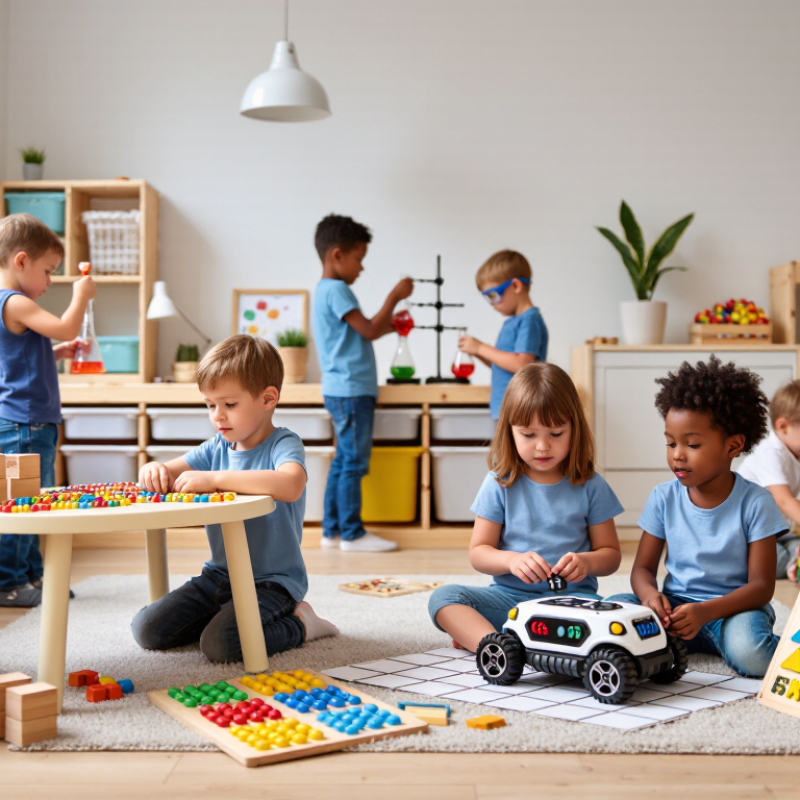
Educational toys are play materials designed to build skills while children explore. They may include puzzles, counting sets, building pieces, shape sorters, and simple science kits. Unlike passive entertainment, these toys invite children to touch, compare, arrange, and test ideas. A wooden puzzle can strengthen spatial awareness. Counting pieces can make early mathematics visible. Story cards can expand vocabulary through conversation. Small actions matter.
Early-childhood educators often observe that open-ended toys support concentration and flexible thinking. Children make choices, face mistakes, and try different solutions. During play, a child may stack blocks, watch them fall, and change the base. This ordinary moment teaches balance, patience, and cause-and-effect reasoning. Social toys also encourage turn-taking and communication. However, results depend on the child’s age, interests, and adult support. The same toy may challenge one child and frustrate another.
The phrase “educational toy” can be misleading. Bright colors and complex functions do not automatically create meaningful learning. A simple sorting tray may offer more value than a noisy electronic product. In practice, adults should watch how children use a toy, not only read its packaging. Is the child asking questions? Are they creating new games? Is the activity still enjoyable after several uses? I have found that gentle guidance works better than constant correction. Children need room to struggle, even when their towers collapse. Safe materials, clear age guidance, and durable construction also matter, although no toy fits every family or developmental need.
| No. | Educational Toy Category | Suggested Age | Key Development Areas | How It Supports Child Development | Helpful Adult Interaction |
|---|---|---|---|---|---|
| 1 | Building Blocks and Construction Sets | 1–6 years | Spatial reasoning, fine motor skills, creativity, problem-solving | Children plan, balance, connect, and modify structures while learning about shape, size, position, and cause and effect. | Ask open-ended questions such as “What could make the tower stronger?” rather than completing the structure for the child. |
| 2 | Jigsaw Puzzles and Matching Games | 2–8 years | Visual perception, memory, attention, logical thinking | Matching pieces and recognizing patterns encourage children to compare information, persist through difficulty, and use trial-and-error reasoning. | Choose an appropriate difficulty level and encourage children to describe colors, shapes, edges, and possible matches. |
| 3 | Shape Sorters and Early Math Manipulatives | 1–5 years | Early numeracy, classification, hand–eye coordination | Sorting by color, shape, size, or quantity builds early mathematical language and helps children notice similarities and differences. | Use simple words such as “more,” “less,” “same,” “different,” “under,” and “beside” during play. |
| 4 | Pretend-Play Sets and Dolls | 2–7 years | Language, social understanding, emotional development, imagination | Role-play lets children rehearse everyday experiences, express feelings, practice cooperation, and develop stories using symbolic thinking. | Follow the child’s storyline, model respectful communication, and introduce vocabulary connected with feelings and relationships. |
| 5 | Art, Drawing, and Craft Materials | 2–8 years | Fine motor control, self-expression, creativity, visual communication | Drawing, cutting, molding, and joining materials strengthen hand muscles and provide a non-verbal way to communicate ideas and experiences. | Focus on the child’s process and choices instead of judging the final product; supervise materials according to age and safety guidance. |
| 6 | Musical Instruments and Rhythm Toys | 0–6 years | Auditory awareness, rhythm, language, movement, self-regulation | Creating and copying sounds helps children notice pitch, tempo, rhythm, and sound patterns while supporting coordinated movement and listening. | Sing together, copy the child’s rhythm, and keep volume comfortable to protect hearing. |
| 7 | Picture Books and Storytelling Props | 0–8 years | Vocabulary, communication, memory, comprehension, empathy | Shared reading exposes children to language, story structure, new concepts, and different perspectives while building the foundations of literacy. | Discuss pictures, predict what may happen next, invite the child to retell the story, and connect it to daily life. |
| 8 | Balance, Movement, and Active-Play Equipment | 2–8 years | Gross motor skills, balance, coordination, physical confidence | Climbing, balancing, throwing, and moving through space develop body control and support active participation in play. | Provide a clear, safe space and demonstrate movements without forcing children to attempt activities beyond their ability. |
| 9 | Science, Nature, and Discovery Kits | 3–10 years | Observation, questioning, early scientific reasoning, vocabulary | Simple investigations encourage children to observe carefully, make predictions, test ideas, and describe changes in the world around them. | Ask “What do you notice?” and “What do you think will happen?” Always supervise experiments and follow age recommendations. |
| 10 | Board Games and Cooperative Games | 3–10 years | Executive function, turn-taking, counting, communication, emotional regulation | Following rules, waiting, planning, and responding to success or disappointment provide practice in self-control and social problem-solving. | Begin with short, simple games, explain rules clearly, and emphasize participation and learning rather than winning. |
Selection guidance: Choose toys that match the child’s developmental level, allow open-ended play, use durable non-toxic materials, and follow applicable age, choking-hazard, and supervision recommendations.
Puzzles build visual reasoning, patience, and problem-solving. Building blocks develop spatial awareness through balance and structure. Children learn differently. One child counts blocks; another creates a story.
Counting beads and number games make quantities visible. Alphabet tiles support letter recognition, spelling, and vocabulary. Picture cards can help children with emerging speech. Ask simple questions during play.
Sorting trays encourage comparisons of color, shape, and size. Matching cards strengthen memory and attention through repeated recall. Short activities often work best.
Offer larger pieces, stable surfaces, and extra time. Drawing boards strengthen fine-motor control. Avoid rushing the child. Progress may look uneven.
Match one toy with one clear goal. Give short instructions, then allow exploration. Sit nearby and ask, “What could fit here?” Sometimes, less guidance works better.
Check age guidance, loose parts, magnets, batteries, and sharp edges. Keep small pieces away from children under three. Remove damaged toys immediately. Labels are not perfect.
Stay nearby, especially during climbing, pulling, or small-piece play. Check stability and clear the floor area. Familiar toys still need supervision. Accidents can happen quickly.
Yes. Flashing sounds and busy features may overwhelm some children. Offer quieter toys, regular breaks, and a calm space. Watch for frustration or withdrawal.
Observe actions, questions, and repeated attempts. Ask open questions without demanding quick answers. Adults may overestimate academic progress. Play can look messy, yet reveal useful skills.
Balance puzzles with movement, conversation, and quiet time. Role-play encourages cooperation and emotional understanding. Musical toys practice rhythm, listening, and turn-taking. Aim for active play daily.
Educational toys are thoughtfully designed play tools that turn everyday activities into opportunities for learning and growth. Through puzzles, building sets, sorting games, creative materials, and role-play activities, children can explore ideas while developing curiosity and confidence. Parents often ask, “how do educational toys help child development?” These toys support problem-solving, memory, early mathematics, language development, fine and gross motor skills, creativity, communication, and cooperation. Different types of toys meet different learning needs, allowing children to practice at their own pace while enjoying meaningful play.
Choosing an appropriate toy means considering the child’s age, abilities, interests, and developmental stage. Toys should be safe, durable, easy to understand, and free from small parts when used by very young children. At home, adults can encourage children with simple questions, demonstrate safe use, and allow them to explore independently without taking over. With balanced guidance and regular interaction, educational toys can make learning engaging while helping children build skills that support future academic, emotional, and social development.

 Toym Toy